
Ray Brassier doesn't like you.
Posted by | Chris | 5.3.11 | 15 Comments
In an interview here Ray Brassier makes a brief and interesting summary of his philosophy. It's well worth a read. However, he also dismisses Speculative Realism with the following sneering words:
Clearly, to show disdain for those philosophers with whom you disagree does not disqualify your own thought. In fact, Brassier is that much more imposing because he clearly wields a formidable intellect, intervening with technical acumen across a wide spectrum of philosophy.
The remorseless attacks on opponents clearly stem from Brassier's nihilist will to know (truth). A program of knowledge so mono-maniacally motivated by objective truth will clearly regard other disciplines and ideas as false, pointless distractions. I am nervous of attempting to mount a counterargument to this attitude and the possibility of sounding like a relativist, thereby consigning myself to the same anti-philosophical trash-heap as so many of Brassier's foils. However, such a challenge can be made, most interestingly on the grounds of what defines philosophy and science.
Brassier describes the relationship of philosophy to science as being to distinguish "which of its metaphysical assumptions are empirically fertile, and which are obstructive and redundant". I would tend to agree with this. But my problem with Brassier's project is the very narrow characterisation of these disciplines. Very briefly, I think that it is difficult to countenance a philosophical program which is so concerned to pitilessly policing the discipline and ejecting from it all but those select few who conform to your way of thinking. To say this is not to admit relativism or anti-realism, only to suggest that in the continuing adventure of intellectual discovery there are many things of which we cannot be certain, and therefore it would be better to nurture a pluralistic, respectful and open attitude at the same time as engaging in constructive dialogue about truth, knowledge and the world. There may be many more 'empirically fertile' a priori assumptions than Brassier would like to admit.
The ‘speculative realist movement’ exists only in the imaginations of a group of bloggers promoting an agenda for which I have no sympathy whatsoever: actor-network theory spiced with pan-psychist metaphysics and morsels of process philosophy. I don’t believe the internet is an appropriate medium for serious philosophical debate; nor do I believe it is acceptable to try to concoct a philosophical movement online by using blogs to exploit the misguided enthusiasm of impressionable graduate students. I agree with Deleuze’s remark that ultimately the most basic task of philosophy is to impede stupidity, so I see little philosophical merit in a ‘movement’ whose most signal achievement thus far is to have generated an online orgy of stupidity.I'm aware that my post below, a jumbled collection of my feelings after finishing Nihil Unbound, didn't amount to much in the way of philosophical contribution. It's not much of an argument to think that someone's a bit mean. Reading the paragraph above however, I was struck again by just how ruthlessly unpleasant Brassier can be. To say that he lacks the urbanity of thought which Whitehead praises in Plato for instance would be an understatement.
Clearly, to show disdain for those philosophers with whom you disagree does not disqualify your own thought. In fact, Brassier is that much more imposing because he clearly wields a formidable intellect, intervening with technical acumen across a wide spectrum of philosophy.
The remorseless attacks on opponents clearly stem from Brassier's nihilist will to know (truth). A program of knowledge so mono-maniacally motivated by objective truth will clearly regard other disciplines and ideas as false, pointless distractions. I am nervous of attempting to mount a counterargument to this attitude and the possibility of sounding like a relativist, thereby consigning myself to the same anti-philosophical trash-heap as so many of Brassier's foils. However, such a challenge can be made, most interestingly on the grounds of what defines philosophy and science.
Brassier describes the relationship of philosophy to science as being to distinguish "which of its metaphysical assumptions are empirically fertile, and which are obstructive and redundant". I would tend to agree with this. But my problem with Brassier's project is the very narrow characterisation of these disciplines. Very briefly, I think that it is difficult to countenance a philosophical program which is so concerned to pitilessly policing the discipline and ejecting from it all but those select few who conform to your way of thinking. To say this is not to admit relativism or anti-realism, only to suggest that in the continuing adventure of intellectual discovery there are many things of which we cannot be certain, and therefore it would be better to nurture a pluralistic, respectful and open attitude at the same time as engaging in constructive dialogue about truth, knowledge and the world. There may be many more 'empirically fertile' a priori assumptions than Brassier would like to admit.

Public Domain Plato with Stephanus Pagination.
Posted by | Chris | 1.3.11 | 6 Comments

There are many public domain texts of Plato's works but almost none of them have the Stephanus pagination, making them useless for citations. Perseus Digital Library is an excellent resource with Stephanus numbers and side by side Greek text, but it's browser only format makes it difficult to read.
Prompted by this I have collected two English translations of Plato's Timaeus and the original Greek. I have used Benjamin Jowett's 1871 translation available from Project Gutenberg, W.R.M. Lamb's 1925 translation available from Perseus and the Greek also from Perseus.
I'm aware that Jowett's translation is not highly regarded. I can't find any comment on Lamb's. However, both are available for free and side by side with the Greek they at least give a place to start in a study of the Timaeus.
The document is available to download as a PDF here. This is a first edit for which I have not fully checked. A properly corrected version will follow.
Prompted by this I have collected two English translations of Plato's Timaeus and the original Greek. I have used Benjamin Jowett's 1871 translation available from Project Gutenberg, W.R.M. Lamb's 1925 translation available from Perseus and the Greek also from Perseus.
I'm aware that Jowett's translation is not highly regarded. I can't find any comment on Lamb's. However, both are available for free and side by side with the Greek they at least give a place to start in a study of the Timaeus.
The document is available to download as a PDF here. This is a first edit for which I have not fully checked. A properly corrected version will follow.
Completely at odds with reality
Posted by | Chris | 22.2.11 | 1 Comment
So David Cameron thinks opposition to the arms trade is "completely at odds with reality". Which reality would that be David? A capitalist one I suppose?
I don't know if it was Cameron or the Guardian journalist who describes Gulf nations as though they were fluffy woodland creatures: "[it's] wrong to leave small Gulf countries to fend for themselves".
It's also darkly amusing to note that Cameron invokes Iraq's invasion of Kuwait to justify the arms trade. Who armed Iraq then?
His "staunch" three-point defence appears to amount to:
I don't know if it was Cameron or the Guardian journalist who describes Gulf nations as though they were fluffy woodland creatures: "[it's] wrong to leave small Gulf countries to fend for themselves".
It's also darkly amusing to note that Cameron invokes Iraq's invasion of Kuwait to justify the arms trade. Who armed Iraq then?
His "staunch" three-point defence appears to amount to:
- People should be allowed to defend themselves (read "militarily supported dictators" for people).
- We're not as bad as other countries.
- We do some nice things as well as selling bullets to repressive regimes.
The incredible bravery, organisation and solidarity of people all across the gulf is enormously inspiring. The twisted, deceitful worming of a number of Western politicians is sickening. Protesters across the region have put the lie to the hypocrisy of the political "elite".
The differentiated powers of lumpy productive substance
In a continuing series of comments regarding comments about replies to replies Levi Bryant talks about anteriority and references a twitter discussion here and here.
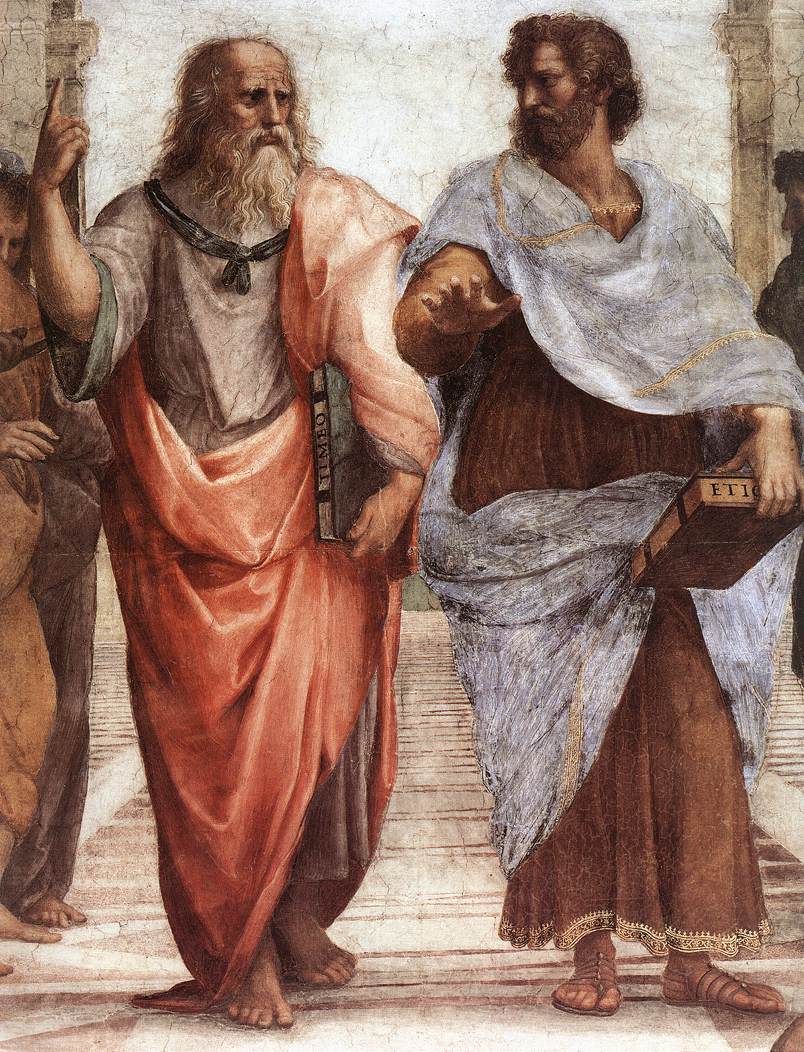
For me this is the most exciting debate to come out of The Speculative Turn, highlighting the differences and marking terrain not just between OOO and "Grantian-Schellingian powers" (for want of a better designation) but at the heart of metaphysics. This question runs right back to Plato and Aristotle: what is primary, substance or power?
Bryant himself pointed out the lineage of this discussion just a few days ago. However, and I think representatives of OOO would agree, it is too simplistic to mark alliances in terms of Aristotle-OOO/Plato-powers. While these alliances are extant, in both cases a process of appropriation, argumentation and transformation is underway. Here, I wish to make two brief points: 1) I disagree with Aristotle'/Levi's reading of Plato; and 2) there is a problem of powers predicated of substances which the productive substances of OOO occlude rather than solve.
First, the Platonic forms are not reified predicates. There is no beauty itself, since new beautiful things are always possible and the complete history of beauty is unrecoverable. The failure of Socrates and his interlocutors to adequately define any of the ideas attests to their non-objectifiable nature. I argue instead for a powers ontology reading of Platonic physics, although this is a point for extended discussion.
Second, the gambit of OOO, that being is plural and substantial, is an attempt to do justice to our experience of mid-size objects and to avoid an ontology of pre-individual apeiron. Plurality is unproblematic, but the substantial element of OOO is tied to a problem of anteriority -the answers to which seem to dissolve the difference between powers and substances.
OOO argues for the creation and destruction of substance and so any necessary ontological substance - a primary substance as uncreated pre-requisite of all being - is ruled out. With productive substances there is a regress of "objects all the way down". I agree with OOO that this is an unproblematic regress, akin to contemporary debates around ungrounded powers.
In powers ontologies their is often an equivocation regarding powers and substances: powers are ungrounded, yet they are also dispositional and predicated of things; i.e. held by something, therefore not ungrounded but grounded in substance. This is the problem of anteriority: if powers are held by substances then from where did the substances come? If substance is a product of powers then either these powers must also be held by substance - and this regress is problematic - or powers are not predicated of substance and are properly ungrounded.
It seems to me that the argument for productive substances of OOO avoids this problem by blurring the definition of substance and power. If "substances are produced out of other substances" and "anteriority is not something other than substances, but rather is composed of other substances" how is substance different from power? The answer to this question is made quite plain by Morton: "production is a substance"; i.e. they're not different except that the production of OOO is 'chunky' or 'lumpy'.
As Bryant observes then, it seems that there is in fact little dispute between ontologies of substance and those of productive powers. But, I feel that this reply leaves too much unexplained. In marking the difference between power and substance we are also returned to another dispute: the relational vs. non-relational. This is a challenge to powers ontologies to which no reply has yet been properly articulated.
Regarding any apeiron of powers, the avoidance of which the lumpy productive of OOO is aimed at, Shaviro puts the point well: "The "pre-individual" (in Simondon, Deleuze, Grant) is NOT continuous, not the whole, not undifferentiated. Rather, it's the realm of powers."
Is there a difference between power and substance? I don't think that they can easily be collapsed and therefore this dispute goes on.
For me this is the most exciting debate to come out of The Speculative Turn, highlighting the differences and marking terrain not just between OOO and "Grantian-Schellingian powers" (for want of a better designation) but at the heart of metaphysics. This question runs right back to Plato and Aristotle: what is primary, substance or power?
Bryant himself pointed out the lineage of this discussion just a few days ago. However, and I think representatives of OOO would agree, it is too simplistic to mark alliances in terms of Aristotle-OOO/Plato-powers. While these alliances are extant, in both cases a process of appropriation, argumentation and transformation is underway. Here, I wish to make two brief points: 1) I disagree with Aristotle'/Levi's reading of Plato; and 2) there is a problem of powers predicated of substances which the productive substances of OOO occlude rather than solve.
First, the Platonic forms are not reified predicates. There is no beauty itself, since new beautiful things are always possible and the complete history of beauty is unrecoverable. The failure of Socrates and his interlocutors to adequately define any of the ideas attests to their non-objectifiable nature. I argue instead for a powers ontology reading of Platonic physics, although this is a point for extended discussion.
Second, the gambit of OOO, that being is plural and substantial, is an attempt to do justice to our experience of mid-size objects and to avoid an ontology of pre-individual apeiron. Plurality is unproblematic, but the substantial element of OOO is tied to a problem of anteriority -the answers to which seem to dissolve the difference between powers and substances.
OOO argues for the creation and destruction of substance and so any necessary ontological substance - a primary substance as uncreated pre-requisite of all being - is ruled out. With productive substances there is a regress of "objects all the way down". I agree with OOO that this is an unproblematic regress, akin to contemporary debates around ungrounded powers.
In powers ontologies their is often an equivocation regarding powers and substances: powers are ungrounded, yet they are also dispositional and predicated of things; i.e. held by something, therefore not ungrounded but grounded in substance. This is the problem of anteriority: if powers are held by substances then from where did the substances come? If substance is a product of powers then either these powers must also be held by substance - and this regress is problematic - or powers are not predicated of substance and are properly ungrounded.
It seems to me that the argument for productive substances of OOO avoids this problem by blurring the definition of substance and power. If "substances are produced out of other substances" and "anteriority is not something other than substances, but rather is composed of other substances" how is substance different from power? The answer to this question is made quite plain by Morton: "production is a substance"; i.e. they're not different except that the production of OOO is 'chunky' or 'lumpy'.
As Bryant observes then, it seems that there is in fact little dispute between ontologies of substance and those of productive powers. But, I feel that this reply leaves too much unexplained. In marking the difference between power and substance we are also returned to another dispute: the relational vs. non-relational. This is a challenge to powers ontologies to which no reply has yet been properly articulated.
Regarding any apeiron of powers, the avoidance of which the lumpy productive of OOO is aimed at, Shaviro puts the point well: "The "pre-individual" (in Simondon, Deleuze, Grant) is NOT continuous, not the whole, not undifferentiated. Rather, it's the realm of powers."
Is there a difference between power and substance? I don't think that they can easily be collapsed and therefore this dispute goes on.
Category:
anteriority,
Aristotle,
Levi Bryant,
plato,
powers,
substance,
The Speculative Turn,
Timothy Morton
The death of the stars means I don't have to listen to you.
Posted by | Chris | 20.2.11 | 3 Comments

Hello world! I have the internet at home again so I'm back in the matrix. I've been in one of those moods recently where I'd read a bit and feel like I should read some more before I wrote anything; the writing is eternally deferred and my reading amounts to little more than "oh, that's interesting". I've not been very productive.
During this period I've reread Nihil Unbound and searched out a few essays by Brassier and his influences. I find equal parts of Brassier's philosophy exciting and repellent. His commitment to realism, his insightful critique of other philosophers, his engagement with science are all things to admire and learn from. What I find I cannot endorse however is a certain tone of writing, the stylistic match to his project of 'disenchantment'.
Clearly my distaste at a certain type of prose is not in any way a philosophical rejoinder to the project of disenchantment. Were I to present it as such I have no doubt that any lucid nihilist-scientist would destroy my position with ease, or more likely simply disregard it.
Many of Brassier's arguments are serious, sometimes savage, challenges to his opponents. But none of them destroy or eliminate their target. If you are committed to phenomenology then it is likely that you will simply ignore Brassier's arguments.
Brassier may be right about the meaninglessness of existence, the unilateral power of being and its "being nothing". In the nihilist atopian future we may all join in making ourselves equal to the nothing of being, joining in the will to know. But this somewhat facetious prediction contains the kernel of one of my central criticisms; Brassier, like his eliminativist allies, appears quite concerned to tell other people how things should be done and spends much of his time adding to the list of things which we should disregard as a meaningless waste of time. What remains appears to me to be a mean-spirited essentialism about knowledge and science.
None of this amounts to a proper argument against this type of philosophy. Indeed, I have a hard time disentangling what I agree with from what I would choice to challenge. But one final thing that really makes me feel unwell is the disdain sometimes reserved for other style's of philosophy when in fact a stylistic choice seems to inform some of the work of Brassier's and his counterparts. Brassier is biting about leaving phenomenology as literature, yet much of his own work is effective precisely because of his gloriously nihilist rhetoric.
Again, none of this disqualifies the arguments, but it adds to the impression of a type of philosophy unconcerned to engage its opponents, assured as it is of its own superiority it can simple present the facts and flip you the finger if you disagree.
Timothy Morton's been writing recently on scientism and I especially enjoyed this irreverent post.
which reminds me
Posted by | Anonymous | 30.1.11 | 1 Comment
The Ayn Rand article below reminded me of this 'review' of Atlas Shrugged.
... a non-trivial number of Atlas Shrugged readers are possibly far enough along the Asperger spectrum that they don’t recognize humanity does not in fact easily suss out into Randian capitalist superheroes on one side and craven socialist losers on the other, or that Rand’s neatly-stacked deck doesn’t mirror the world as it is, or (if one gives it any sort of genuine reflection) model it as it should be.
Libertopia
From: Ayn Rand and the VIP-DIPers — Michael Ford
A heavy smoker who refused to believe that smoking causes cancer brings to mind those today who are equally certain there is no such thing as global warming. Unfortunately, Miss Rand was a fatal victim of lung cancer.
However, it was revealed in the recent "Oral History of Ayn Rand" by Scott McConnell (founder of the media department at the Ayn Rand Institute) that in the end Ayn was a vip-dipper as well. An interview with Evva Pryror, a social worker and consultant to Miss Rand's law firm of Ernst, Cane, Gitlin and Winick verified that on Miss Rand's behalf she secured Rand's Social Security and Medicare payments which Ayn received under the name of Ann O'Connor (husband Frank O'Connor).
As Pryor said, "Doctors cost a lot more money than books earn and she could be totally wiped out" without the aid of these two government programs. Ayn took the bail out even though Ayn "despised government interference and felt that people should and could live independently... She didn't feel that an individual should take help."
I can almost hear the libertarians limbering up for what proves to be a feat of mental gymnastics in order to justify this one.
rss:


 Posts
All Comments
Posts
All Comments