
Idealism: The History of a Philosophy - Review
Posted by | Chris | 20.5.11 | 6 Comments

Idealism: The History of a Philosophy achieves its subtitle with admirable and compelling clarity, weaving an intellectually invigorating narrative of two and a half millennia of idealist thought. An area of philosophy much maligned, and, in the estimation of the authors, much misunderstood, the book sets out to rediscover the potential of the Idea by explicating the common themes and problematics of its thinkers and to counter criticisms by showing the powerful conceptual possibilities and contemporary relevance of idealism.
Divided first into sections (ancient, early modern, German, British and contemporary idealisms) and then into chapters, each focuses on a thinker or group of thinkers representative of a certain branch of idealism. The great strength of these chapters is their condensation of an easy to understand introduction to some of the important features of each philosophers work. History is always partial of course, and Idealism is no exception. The argument made throughout the book is for a continually developing philosophy, bringing the power of the Idea to bear in broad range of topics – including those often considered as antithetical to idealism.
The central claims of the authors, repeated and rehearsed in arguments throughout the book, are:
- Philosophical idealism need not exclude either naturalism or realism, nor is it necessarily anti-science.
- Idealism is instead an extreme or cosmic realism, a realism about all that there is.
- In particular it is realism concerning the Idea: the cause of an organisation that is not formal, abstract or separable “but rather concretely relates part to whole as whole [...] such an idealism is a one-world idealism that must, accordingly, take nature seriously” (8)
In this regard Ideas (capitalised to make clear the difference from mere 'ideas' or the thoughts of finite rational beings) are the loci around which every philosophy here included moves. Differing in their conceptualisation, what they have in common in every thinker – whether explicitly or not – is their role as the powers of being which structure and organise existence.
The book begins as it means to continue: by challenging the casting of idealism as an early modern phenomena that makes reality entirely mind dependent. The first idealism, it is argued, comes from Fragment B3 of On Nature, the Parmenidean identity thesis: “it is the same thing that can be thought and that can be” (Cornford 1939: 34) (alternatively: “thinking and being are the same” (Philips 1955: 553)). This is an ancient idealism that is explicitly metaphysical and cosmological in scope. The book sets a pattern for what is to follow: by engaging with primary works, pointing attention to translation, interpretation and reception, and critically examining these in the context of a consistent case for idealism as a philosophy of pressing relevance in contemporary discussions.
Parmenides' philosophy is taken as the starting point for Plato's work, presented here as a one-world metaphysics of the dynamics of the Idea. Plato grapples with the problems of monism and questions of being, becoming and non-being. His dynamics are here described in terms of attractors – immanent powers combining efficient and final causality – through which nature becomes what it is. The Neoplatonists develop this physics of the Idea and continue to question the role of causality, the problems of the production and differentiation of nature and the place of reason in the world. Platonic physics sets the standard for all subsequent idealisms, and its focus on natural production and cosmology mark them as truly global in their purview. The chapter makes a clear and well-structured argument for a one world Platonic physics, a view that is perhaps not widely accepted but on which attention is beginning to focus. Indeed, the argument here is considerably clearer than it is in Grant's Philosophies of Nature After Schelling. This comparison makes clear the consistent clarity of writing in Idealism and it's potential audience which could include interested under-grads, the curious uninitiated and also those more experienced philosophers who are perhaps no less unfamiliar with idealism as it is presented here.
Descartes and Malebranche are taken as having as given clear articulation to the problems of Idealist dynamics when they are limited to a certain segment of reality. In particular this early modern philosophy is a response to materialist science in a retreat to phenomenalist idealism. In contrast to Plato's global metaphysics, idealism here begins its retreat to the minds of individual philosophers to escape the problems of science and nature. This circumscription of the domain of the powers of Ideas is a consistent theme of the book - running into 20th century neo-Hegelenianism - and a sticking point for criticism of insufficiently global philosophy that refuses the 'extreme realism' the authors argue is the greatest legacy of idealism.
The tension of philosophy and science also introduces another point of insistence for the authors. If much of 20th century continental philosophy has displayed an illiteracy, or worse, disdain, of science that has left it unable to face up to the problems and developments of the 21st century, this does not mean that a newly engaged, naturalistic and speculative philosophy cannot make productive use of the conceptual legacy of idealism. If idealism is extreme realism the one thing it is surely opposed to is reductionism, especially mechanical materialism. To admit “a real distinction between matter and spirit leads ultimately to an insoluble problem regarding causality. If mechanist matter is inert and lifeless then how can it cause consciousness?” (204). If the phenomenalist or subjectivist idealists err by retreating into a world of sensation it is not a failure of imagination but the problem of causation. The dynamics of the Idea provide the motor of becoming, but is there any reason why this dynamism need be limited to consciousness? Properly oriented idealist naturalism is possible and there is no reason, as Galen Strawson has argued, why idealism might not also be a form of materialism (quoted 12).
Interestingly Berkely is one of the stars of the book. Often considered paradigmatic of subjectivist idealism, this conception is complicated and set in context. Whilst clearly the most extreme of the phenomenalist idealists the problem of solipsism, the common functioning of minds and the eternal existence of Ideas as the ground of the temporal are all addressed by Berkeley. His philosophy takes a small section of the book, but critics of idealism who suggest that “idealism = Berkeleyanism” are referred to the scope and urgency of idealist thinking, which Berkeley himself manifested, and which this equation ignores.
The German idealists occupy the middle section of the book and this period of sustained development of idealist thinking is exhilarating to behold. Each chapter could serve as an introduction to the specific philosopher, but the focus of the book also draws out elements of their thought in relation to the eternal and the temporal, the structuring role of Ideas, and the dynamics of thought and nature. The final chapter of this section on Hegel is a high point of the book, rightly proclaiming Hegel as one of the most accomplished thinkers of the Idea – expanding and developing idealism through his concept of the 'concrete universal'.
The chapter on Hegel especially (but also Kant and Fichte) serves to highlight one of the potential criticisms of the book however – namely that criticism of the idealists themselves is minimal. The philosophy of every thinker included here is presented as part of an argument for a continuing problematic of idealism and as such the positive aspects of their work are foregrounded. The failures, blind-spots and omissions are only hinted at or addressed briefly. For example “Hegel’s stupefying judgement in the Encyclopaedia (§ 339) that there is nothing philosophically pertinent in geology” (The Speculative Turn: 41), obviously recognised by Grant, is not raised here. The reason for this generous dispensation is obvious however: there is ample literature devoted to criticisms of idealism, so much so that in the opinion of Dunham, Grant and Watson that these criticisms have become caricatures. The purpose of Idealism is to redress the balance and to make a case by careful engagement with these thinkers on their own terms, to unearth the concepts which animate their thought and to make their legacy a viable and fertile are for future investigation. The book does highlight problems with its protagonists, especially in later chapters, but these are set in the context of a philosophy which can provides the resources for engaging and overcoming these problems rather than simply dismissing them - either as unproblematic or uninteresting.
The penultimate section of the book takes a look British idealism from the early twentieth century. This is a fascinating section showing the development of German idealism (especially Hegel) in a different context, and, most interestingly, surveying the historical roots of the analytic-continental divide. It is a point to remark upon that G.E. Moore's Refutation of Idealism (1903), and the post-idealist generations of philosophers, for example Russell and Frege, are imbued with overt an Platonism. In this way Idealism also weaves its argument, putting forward Hegel as a presence in philosophy whose impact has not yet been fully understood, and whose development of the Idea holds the seeds of changing attitudes and approaches to the old divisions.
Two brief surveys of idealist science are over all too quickly before the final chapter on contemporary idealisms. The scientists chosen for this idealist experiment are Maturana & Varela and Stewart Kaufman. The case for Maturana & Varela's idealism is intriguing since it is made against their own arguments, revealing a tension in their work between idealist realism (organisation, autopoesis, Idea), Kantian critical impulses (disavowing organisation as a fact of nature), and a commitment to mechanical materialism. That idealist science is here biological science will do little to quiet critics of vitalism, though quick reference to Lee Smolin and Julian Barbour, whose fields of physics and cosmology could not be more wide ranging, show the potential of idealism in science. The chapter ends with a quote from Smolin, in what could easily be a call to action: “In the past, philosophers like Leibniz did not hesitate to tell physicists when they were speaking nonsense. Why now, when so much is at stake, are the philosophers so polite?” (Smolin 1999: 244; quoted 255).
There is more packed into the books 300 pages than this review can do justice to and the shear number of interesting avenues of thought opened here is a testament to the authors achievements. Deserving more than this brief mention other highlights include the survey of neo-Hegelians, including Žižek, which is critical of the insufficiency of metaphysics sublimated to ethical axiology. Also, the section on Whitehead, especially in contrast with a potentially even more exciting and much too brief look at Deleuze, whose presentation as an idealist is wonderfully heterodox. These thinkers and there reading here have much to add to recent debates, including that between Grant and Harman (The Speculative Turn: 21-46). Idealism is a work of impressive study and a stimulating project that, whatever your position, will be a cause for new thinking and a challenge to our ideas.

Category:
Chris,
deleuze,
Fichte,
Hegel,
iain grant,
Idealism,
Jeremy Dunham,
kant,
plato,
review,
science,
Sean Watson,
smolin,
speculative realism,
The Speculative Turn,
whitehead
The differentiated powers of lumpy productive substance
Posted by | Chris | 22.2.11 | 1 Comment
In a continuing series of comments regarding comments about replies to replies Levi Bryant talks about anteriority and references a twitter discussion here and here.
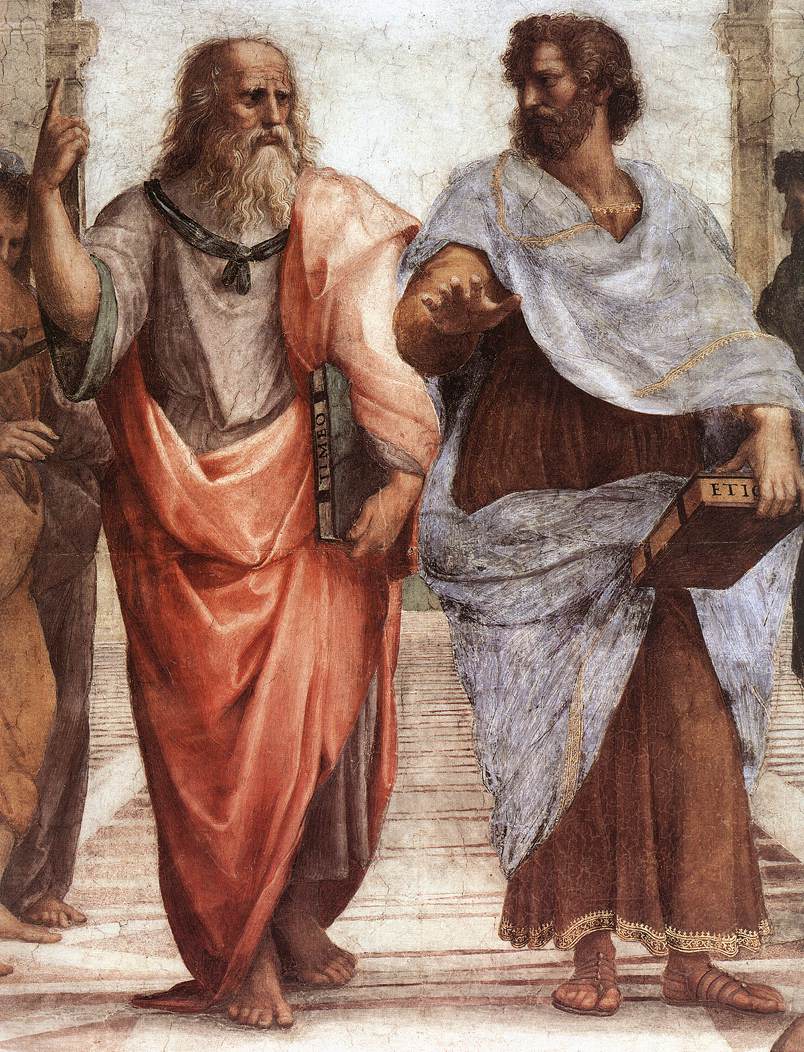
For me this is the most exciting debate to come out of The Speculative Turn, highlighting the differences and marking terrain not just between OOO and "Grantian-Schellingian powers" (for want of a better designation) but at the heart of metaphysics. This question runs right back to Plato and Aristotle: what is primary, substance or power?
Bryant himself pointed out the lineage of this discussion just a few days ago. However, and I think representatives of OOO would agree, it is too simplistic to mark alliances in terms of Aristotle-OOO/Plato-powers. While these alliances are extant, in both cases a process of appropriation, argumentation and transformation is underway. Here, I wish to make two brief points: 1) I disagree with Aristotle'/Levi's reading of Plato; and 2) there is a problem of powers predicated of substances which the productive substances of OOO occlude rather than solve.
First, the Platonic forms are not reified predicates. There is no beauty itself, since new beautiful things are always possible and the complete history of beauty is unrecoverable. The failure of Socrates and his interlocutors to adequately define any of the ideas attests to their non-objectifiable nature. I argue instead for a powers ontology reading of Platonic physics, although this is a point for extended discussion.
Second, the gambit of OOO, that being is plural and substantial, is an attempt to do justice to our experience of mid-size objects and to avoid an ontology of pre-individual apeiron. Plurality is unproblematic, but the substantial element of OOO is tied to a problem of anteriority -the answers to which seem to dissolve the difference between powers and substances.
OOO argues for the creation and destruction of substance and so any necessary ontological substance - a primary substance as uncreated pre-requisite of all being - is ruled out. With productive substances there is a regress of "objects all the way down". I agree with OOO that this is an unproblematic regress, akin to contemporary debates around ungrounded powers.
In powers ontologies their is often an equivocation regarding powers and substances: powers are ungrounded, yet they are also dispositional and predicated of things; i.e. held by something, therefore not ungrounded but grounded in substance. This is the problem of anteriority: if powers are held by substances then from where did the substances come? If substance is a product of powers then either these powers must also be held by substance - and this regress is problematic - or powers are not predicated of substance and are properly ungrounded.
It seems to me that the argument for productive substances of OOO avoids this problem by blurring the definition of substance and power. If "substances are produced out of other substances" and "anteriority is not something other than substances, but rather is composed of other substances" how is substance different from power? The answer to this question is made quite plain by Morton: "production is a substance"; i.e. they're not different except that the production of OOO is 'chunky' or 'lumpy'.
As Bryant observes then, it seems that there is in fact little dispute between ontologies of substance and those of productive powers. But, I feel that this reply leaves too much unexplained. In marking the difference between power and substance we are also returned to another dispute: the relational vs. non-relational. This is a challenge to powers ontologies to which no reply has yet been properly articulated.
Regarding any apeiron of powers, the avoidance of which the lumpy productive of OOO is aimed at, Shaviro puts the point well: "The "pre-individual" (in Simondon, Deleuze, Grant) is NOT continuous, not the whole, not undifferentiated. Rather, it's the realm of powers."
Is there a difference between power and substance? I don't think that they can easily be collapsed and therefore this dispute goes on.
Category:
anteriority,
Aristotle,
Levi Bryant,
plato,
powers,
substance,
The Speculative Turn,
Timothy Morton
Universal Acid
Posted by | Anonymous | 4.1.11 | 1 Comment
Reading the Stengers chapter in The Speculative Turn when I ought to be writing about noumenal causation, I came across this paragraph about eliminativisim and Dennett (et al):
The universal acid of the so-called dangerous idea of Darwin is just what is needed. It brings no effective understanding of evolutionary processes but is eliminating, dissolving away, all reasons to resist the redefinition of humans as a piece of engineering that can be understood in terms of algorithms, and modified at will. And those who struggle against this operative redefinition of our worlds will have against them the authority of reason and science.
The Future Is...
Posted by | Chris | 29.12.10 | 4 Comments
Steven Shaviro's chapter in The Speculative Turn (“The Actual Volcano: Whitehead, Harman, and the Problem of Relations”) continues an ongoing argument aimed at the Object Oriented Ontologists. For Harman and OOO objects are withdrawn from all relations in their ultimate being. No relation or set of relations can ever exhaust an object since it is a substance above and beyond all of its encounters with other objects. In contrast there is a large, and sometimes disparate, group of philosophers who maintain that the ontological being of things inheres in their relations. Alfred North Whitehead is unquestionably one of these and is championed by Shaviro as holding the answers to a great many metaphysical problems.
I've got a great deal of respect for Shaviro's Whiteheadianism; Whitehead is perhaps my favourite philosopher and Shaviro's work has done a great deal to present and make clear the relevancy of Whitehead to contemporary debates. I love Shaviro's application of Whitehead to contemporary technological and cultural questions too. However, in the current debate I find I'm more keenly aware of Whitehead's shortcomings than of his sometimes daring, but always urbane, contributions to philosophy.
Graham Harman has often made clear his debt and appreciation to Whitehead, but equally he has been quick to point out the difficulties presented by Whitehead's ontology. Primary amongst these is Whitehead's relationism. For Harman any ontology defined entirely by its relations is unable to account for change. If any entity is defined by it's relations then it is exhaustively defined, there is nothing beyond its relations and hence nothing which might act as a motor for change in the entity.
I find it interesting that while Whitehead's realtionism is the main point of argument in Harman's reply, he makes no mention of 'decision' which holds a central place in Shaviro's Whiteheadian rebuttals to OOO. In Whitehead's philosophy decision is the final act whereby entities become what they are. It is the selection among alternatives which gives each entity its particular view on the world. Recently Shaviro has suggested that some variant of panpsychism might more usefully address problems in the sciences (as opposed to a focus on 'life') by considering mentality incipient in all things. This mentality Shaviro construes in terms of decision.
Perhaps the reason Harman does not address decision is that a criticism of it is implicit in his attack on Whitehead's relationism:
I fear that Harman may be right about this. There are further problems for Shaviro and Whitehead when one considers God's role in every actual entity's decision (the freedom of which is extremely questionable). And yet I'm not willing to concede an absolute victory to Harman in this case. Whitehead's metaphysics may not be riddled with difficulties (or possibly incoherent), but there is more in it than Harman's argument implies.
For one, I reject Whitehead's ontological principle as the measure of his metaphysics. This is contrary to Whitehead's explicit intentions, but it seems to me that Whitehead himself fails to maintain the principle. If the reason for any change is to be found in actual entities then the notion of an actual entity must be expanded to include the eternal objects. This brings me to my second objection: I strongly disagree with Harman's characterisation of 'eternal objects'.
In Adventures of Ideas Whitehead explicates his metaphysics as a doctrine of immanent law by way of Plato's definition of being as power:
To pull Whitehead in this direction is to make him something like a philosopher of the rumbling apeiron of thinkers like Grant (see below) and Harman is clear that he rejects interpreting Whitehead in this way:
Having come this far from Whitehead's original intention however, it has to be asked if we're strictly Whiteheadians any more. Nor would any of this answer Harman's criticisms of Relationism. But I continue to find The Speculative Turn an exhilarating read suggestive of so many possibilities. I wish Shaviro all the best and I'm totally intrigued by OOO; I'm really excited to see where it goes.
I've got a great deal of respect for Shaviro's Whiteheadianism; Whitehead is perhaps my favourite philosopher and Shaviro's work has done a great deal to present and make clear the relevancy of Whitehead to contemporary debates. I love Shaviro's application of Whitehead to contemporary technological and cultural questions too. However, in the current debate I find I'm more keenly aware of Whitehead's shortcomings than of his sometimes daring, but always urbane, contributions to philosophy.
Graham Harman has often made clear his debt and appreciation to Whitehead, but equally he has been quick to point out the difficulties presented by Whitehead's ontology. Primary amongst these is Whitehead's relationism. For Harman any ontology defined entirely by its relations is unable to account for change. If any entity is defined by it's relations then it is exhaustively defined, there is nothing beyond its relations and hence nothing which might act as a motor for change in the entity.
I find it interesting that while Whitehead's realtionism is the main point of argument in Harman's reply, he makes no mention of 'decision' which holds a central place in Shaviro's Whiteheadian rebuttals to OOO. In Whitehead's philosophy decision is the final act whereby entities become what they are. It is the selection among alternatives which gives each entity its particular view on the world. Recently Shaviro has suggested that some variant of panpsychism might more usefully address problems in the sciences (as opposed to a focus on 'life') by considering mentality incipient in all things. This mentality Shaviro construes in terms of decision.
Perhaps the reason Harman does not address decision is that a criticism of it is implicit in his attack on Whitehead's relationism:
As [Whitehead] puts it early in Process and Reality: ‘The analysis of an actual entity into “prehensions” is that mode of analysis which exhibits the most concrete elements in the nature of actual entities’. In other words, to speak of actual entities in terms of anything but their prehensions is a mere abstraction; the entities themselves are concrescences, or systems of prehensions.(Response to Shaviro: 296).The entities of Whitehead's ontology are nothing but their relations and there is not substance or power left over which could make any decision.
I fear that Harman may be right about this. There are further problems for Shaviro and Whitehead when one considers God's role in every actual entity's decision (the freedom of which is extremely questionable). And yet I'm not willing to concede an absolute victory to Harman in this case. Whitehead's metaphysics may not be riddled with difficulties (or possibly incoherent), but there is more in it than Harman's argument implies.
For one, I reject Whitehead's ontological principle as the measure of his metaphysics. This is contrary to Whitehead's explicit intentions, but it seems to me that Whitehead himself fails to maintain the principle. If the reason for any change is to be found in actual entities then the notion of an actual entity must be expanded to include the eternal objects. This brings me to my second objection: I strongly disagree with Harman's characterisation of 'eternal objects'.
[Whitehead] thinks that qualities pre-exist: he calls them ‘eternal’, after all, and links them with the Platonic forms. No new qualities can ever be produced for Whitehead, for all his reputation as a philosopher of novelty: what is produced in his view is simply new constellations of actual entities, prehended according to pre-existing eternal objects (Ibid: 298).Whitehead certainly deserves some of the blame for this - I wish he'd called his potentials anything but 'eternal' - but Harman's linking them to Platonic forms (in a pejorative sense) needs some explanation. There's little question that Whitehead is a Platonist, but to suggest that his metaphysics conforms to two-worlds ontology of forms is to do a disservice both thinkers.
In Adventures of Ideas Whitehead explicates his metaphysics as a doctrine of immanent law by way of Plato's definition of being as power:
My suggestion would be, that anything which possesses any sort of power to affect another, or to be affected by another even for a moment, however trifling the cause and however slight and momentary the effect, has real existence; and that the definition of being is simply power (Plato, Sophist, 247E).A powers ontology is a long way from the traditional two-worlds ontology traditionally attributed to Plato. To similarly complicate Whitehead's ontology, would be to include eternal objects in the creative generation of the actual entities in the manner promised by Whitehead if not delivered.
To pull Whitehead in this direction is to make him something like a philosopher of the rumbling apeiron of thinkers like Grant (see below) and Harman is clear that he rejects interpreting Whitehead in this way:
You can say what you like about Whitehead […] being interested in process and history. But the real point for them is that all such process is produced by the work of individual entities—a claim that would merely be nonsense for Deleuze, Bergson, Simondon, DeLanda, and Grant (Response to Shaviro: 294).Pushing Whitehead to his limits however, I have often wondered how far he extends his claim to the contingency of the laws of nature? Is the process of actual occasions also contingent? What power determines them? Might it be argued that actual entities are themselves the products of powers and therefore not the "individual entities" doing the work?
Having come this far from Whitehead's original intention however, it has to be asked if we're strictly Whiteheadians any more. Nor would any of this answer Harman's criticisms of Relationism. But I continue to find The Speculative Turn an exhilarating read suggestive of so many possibilities. I wish Shaviro all the best and I'm totally intrigued by OOO; I'm really excited to see where it goes.
Category:
graham harman,
iain grant,
OOO,
powers,
relationism,
Steven Shaviro,
The Speculative Turn,
whitehead
rss:


 Posts
All Comments